

Where to Place a Reed Diffuser (and Why Yours May Not Be Working)
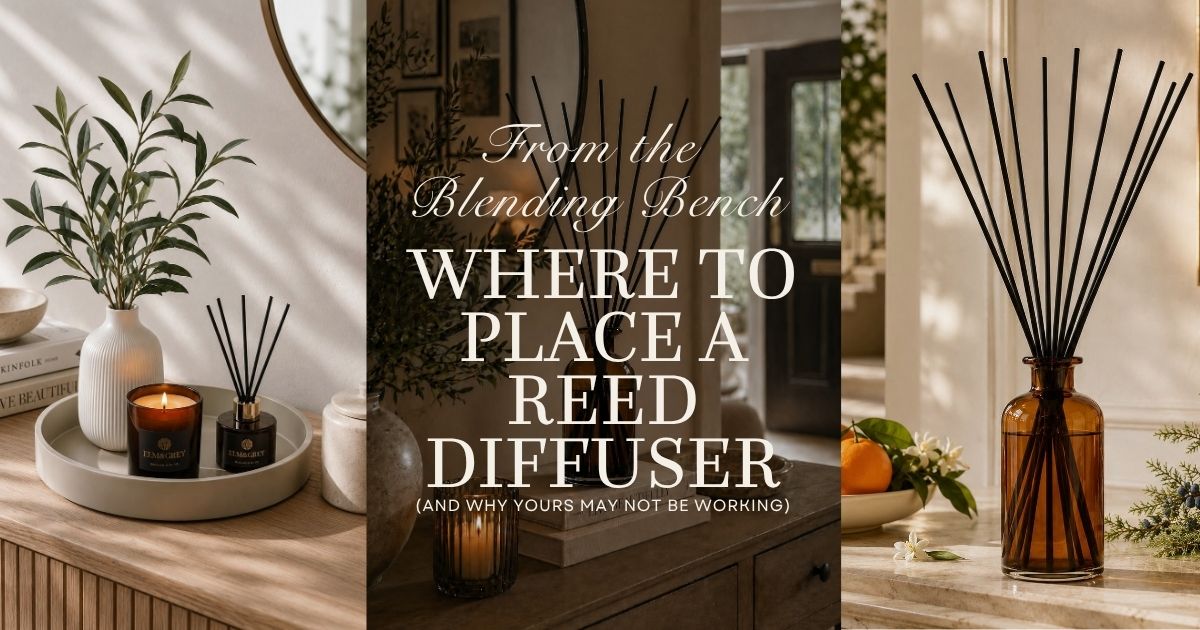
When a diffuser underperforms, placement is usually the first thing worth reconsidering. A well-made blend with a good concentration of fragrance oil carries beautifully through a room. The oil does its part when the formulation is right. What it cannot do is overcome a corner with no airflow, or a room too large for the volume of liquid. A reed diffuser works with the natural movement of air rather than forcing fragrance into a space: there is no heat, no fan, only the calm, gentle draw of a well-ventilated room pulling scent up through the reeds. With that in mind, a quality diffuser placed thoughtfully will always do its finest work.
The three principles that matter most
-
Give it moving air. Reeds release fragrance as air passes over them, so a diffuser relies on the gentle currents already moving through your home. Tucked deep into a bookshelf, it sits in still air with nothing to carry the scent. Placed where people pass; a hallway console, the turn of the stairs, near a doorway; every movement through the room lifts the fragrance and carries it with you.
-
Keep it away from direct heat and sunlight. A sunny windowsill or a spot above a radiator seems sensible, since warmth does push fragrance out faster. But it pushes it out too fast — the most delicate top notes burn away first, and the diffuser is spent in a fraction of its proper life. At normal room temperature, out of direct sun, a blend releases in the order and balance it was composed to follow.
-
Place it at around nose height. Fragrance disperses gently upward and outward. A diffuser at floor level scents very little that you will notice; on a console table, mantel or shelf at roughly chest to head height, it meets you where you actually breathe.
Room by room
Hallway - to my mind the finest room in the house for a diffuser, and where I would place your first. The constant passage of people keeps the air alive, and it is the room every guest meets with a fresh nose, before the day's cooking and living have settled in. It is also where our larger Statement Diffusers come into their own: a hallway connects to everything around it, so a bottle with real presence scents the whole heart of the home.
Cloakroom - a small, enclosed cloakroom is one of the loveliest homes for a diffuser. The confined space concentrates fragrance beautifully, and a downstairs cloakroom is exactly the room where a quiet, continuous scent earns its place. One note from experience: a diffuser fares better in a cloakroom than in a busy family bathroom, where daily shower steam both softens the scent and, over time, shortens the life of the reeds.
If you do want fragrance in a steamy bathroom, expect to refresh the reeds a little more often, since humidity shortens their life. A brighter, fresher blend will tend to register more readily in a room where moisture is already softening the scent; just know that lighter top notes are also the first to fade, so you may notice it most in the first few weeks.
Living room - place them where the air moves rather than where they look most tidy. Beside a doorway, or on a side table close to where you sit, works far better than a distant corner.
Bedroom - a nightstand is a lovely home for a diffuser, and where many people naturally place one. A small tip from experience: if you like it close to the bed, keep the scent gentle, a softer fragrance, or a reed or two removed so it stays a quiet presence rather than a strong note through the night. If you prefer, a dresser or the far side of the room lets it drift more softly still. Either way, warm Unwind fragrances suit this room best.
Kitchen - the most demanding room for any diffuser, and I would rather tell you so than pretend otherwise. Cooking, heat and steam all work against a standing fragrance. If you would like scent here, place the diffuser well away from the hob and choose something bright and citrus-led that holds its own, or let a candle or room spray take this room, which they do more happily.
"Why can't I smell my diffuser?"
A perfumer's troubleshooting notes.
If your diffuser ever seems less present than it was, here are the usual explanations worth knowing, because the first happens with every diffuser and has nothing to do with the fragrance at all.
Your nose has adapted to it. After a fortnight or so living alongside a scent, your brain gradually learns it as part of home and stops actively noticing it. Perfumers call this olfactory adaptation, and none of us are immune. It does not mean the fragrance has faded. Everyone who visits still smells it clearly, because this only fades for you, never for a fresh nose, and you will catch it yourself most when you come home after being out for a while. Any time you want to notice it, step outside for a few minutes and walk back in for a moment of meeting your home the way a guest does, before it quietly settles into the familiar again.
The reeds are ready to be turned. Inverting the reeds once a week brings the freshly soaked ends to the top and noticeably lifts the fragrance for a day or two. Over a longer life the reeds gradually saturate; they are a consumable, and a fresh set will revive a bottle that still holds plenty of oil. We stock replacement diffuser reeds, which we recommend picking up alongside your diffuser refills.
The room is larger than the bottle was made for. A smaller diffuser in a generous open-plan space is working gracefully against the volume of air. Matching the size of the bottle to the size of the room is precisely why we make our Statement Diffusers in 500ml and 1 litre. We test our diffusers in our own studio rather than relying on generic coverage claims and because a diffuser fills a volume of air, not a floor area, we test by room size and ceiling height. We are currently mapping how our 1 litre performs in larger, taller rooms, and we will share what we find.
It is standing in still air. Move it half a metre towards a doorway and give it a few days. This alone resolves more quietly disappointing diffusers than anything else here.
What actually happens over time
Because a well-blended fragrance in a reed diffuser releases scent slowly at room temperature rather than through heat, the character stays far more stable throughout its life than a candle or water-based diffuser. Where change does occur, it is gradual: the fragrance gently settles into its warmer, deeper notes over many weeks, in the same way a great perfume reveals itself slowly rather than all at once.
How long should it last?
Placed thoughtfully, out of heat and direct sun, reeds turned weekly, a signature 100ml diffuser should give you 12 weeks of fragrance, with the larger format 1 litre Statement Diffuser with 60cm reeds lasting approximately 6 months. When the oil eventually runs low, keep the bottle: our replacement reeds and refills cost considerably less than a new diffuser, and the amber glass is designed as a lasting piece for your home, never as packaging to be thrown away.
A well-placed diffuser becomes part of how your home feels rather than something you notice. That quiet, continuous presence is what we had in mind when we made ours, and we hope it finds exactly the right spot in yours.
Warm wishes, Claire and Ness
Frequently asked questions
Where is the best place to put a reed diffuser? Where the air moves and people pass; hallways, landings and near doorways, at around chest height, out of direct sunlight and away from radiators. It is the movement of air through a space that carries the fragrance.
Why can't I smell my reed diffuser? Most often because your nose has adapted to a familiar scent, which is entirely normal. Otherwise, turn the reeds, move it out of a still corner towards a doorway, and check the bottle is sized for the room.
How often should I turn the reeds? Once a week suits most homes. Turning them more often lifts the fragrance faster but shortens how long the oil lasts.
How long does a reed diffuser last? Kept out of heat and direct sun, expect months rather than weeks, with larger bottles lasting proportionally longer. When the oil runs low, refilling the bottle is more economical, and kinder, than replacing it.
Can I put a reed diffuser on a radiator or windowsill? It is better not to. Heat and sunlight release the fragrance too quickly and unbalance the blend, so the diffuser is spent sooner and smells flatter in the meantime.