

How to Choose a Home Fragrance You Will Actually Love
Most of us choose a home fragrance the same way. They stand in front of a shelf of candles and diffusers, try each option, one by one, and by the fifth their nose has given up entirely. In our shop we work with our customers to find our what they are drawn to, what purpose they have for the fragrance and whether they have a favoured go to.
As a perfumer, I can share that the problem is not your nose. It is the question. "Which one do I like?" is almost impossible to answer since we often like a range. The better question, the one I ask when I am working with fragrance, is this:
How do I want the room (and me) to feel?
Answer that, and choosing the scent becomes surprisingly easy.
Start with the feeling, not the fragrance
Every fragrance range we create at Elm & Grey belongs to one of three rituals, because in our experience people are not always shopping for bergamot or vetiver. They are shopping for one of three feelings.
Unwind for winding down. These are the warm, enveloping scents: soft woods, amber, tonka. They suit the end of the day and the rooms where you rest. If your evenings need a full stop, start here. Our bestseller Myrrh & Tonka sits in this family, and it is the fragrance our customers reorder more than any other.
Uplift for brightness and energy. Citrus, green notes, florals with light in them, like Orange Blossom and Juniper and Bergamot, Jasmine and Coconut. These belong to mornings, kitchens, open windows and rooms where life happens at pace.
Reset for clearing the air, in both senses. Fresh clean scents that make a room feel aired like Lime Basil and Mandarin to the deeper green earthiness of Black Fig and Vetiver. They suit hallways, bathrooms and any space that needs to feel like a fresh start.
Choose your ritual first. You have already narrowed the shelf by two thirds.
Then match the scent to the room
Fragrance behaves differently depending on where you put it, and a scent that is beautiful in one room can be wrong in another. A few principles from the blending bench:
Bedrooms want warmth, not volume. Choose something from the Unwind family and keep it soft — a candle burned for an hour or so before sleep, or a diffuser kept away from the pillow end of the room. Rich, warm notes read as comfort at low levels and as heaviness at high ones.
Kitchens fight back. Cooking smells will beat a delicate floral every time. Kitchens suit brighter, sharper scents — citrus and herbs from the Uplift or Reset families — which cut through rather than compete.
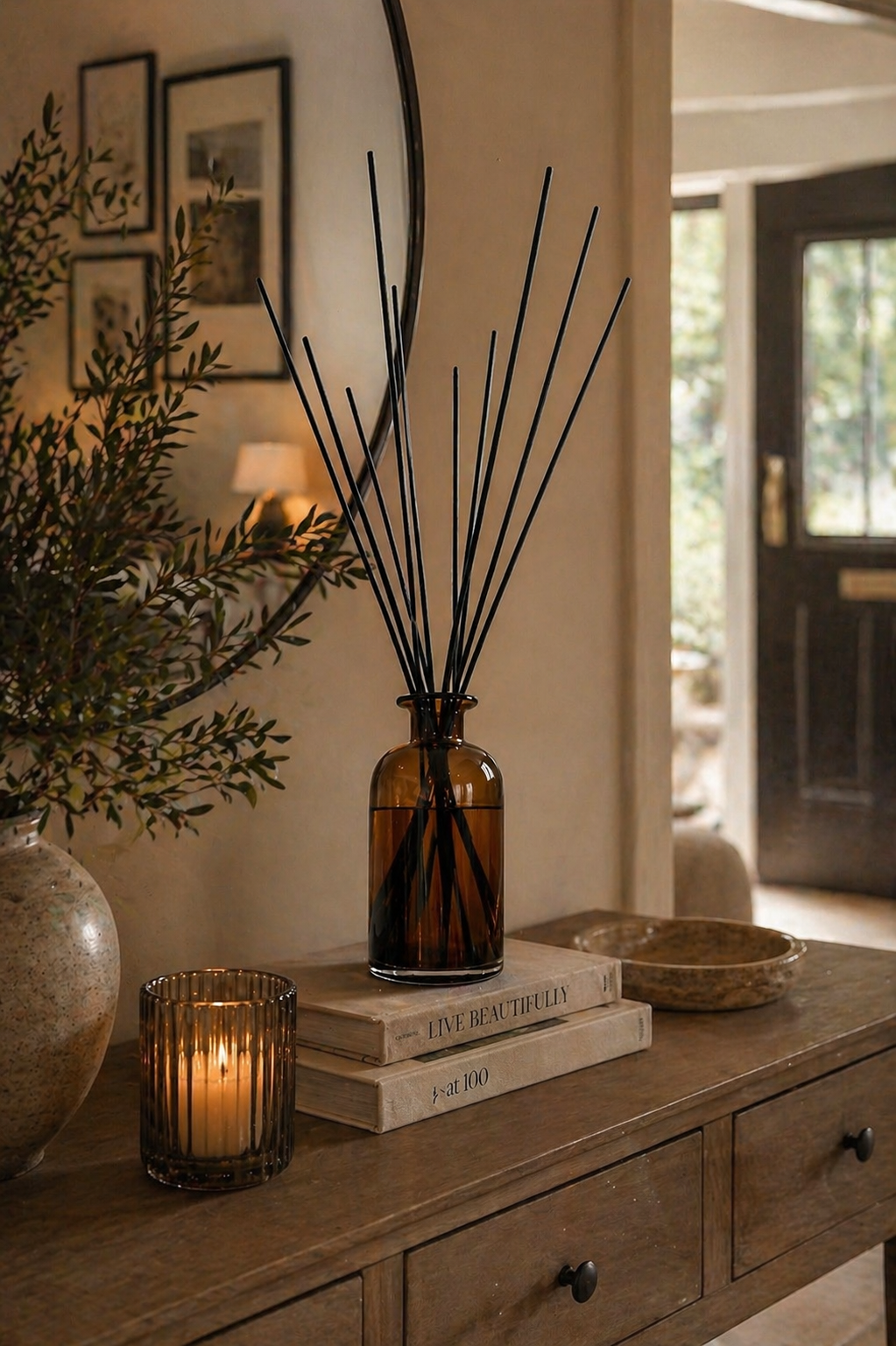
Hallways are your first impression. This is the one room guests always smell, because they arrive with a fresh nose. A hallway suits a scent with a little presence and it is the perfect home for a diffuser, because it works continuously without you thinking about it.
Living rooms can take more complexity. This is where you spend long, relaxed hours, so it suits scents with depth, the kind built on warm resins, tonka and soft woods that unfold slowly the longer you sit with them.
Candle or diffuser?

The honest answer is that they do different jobs.
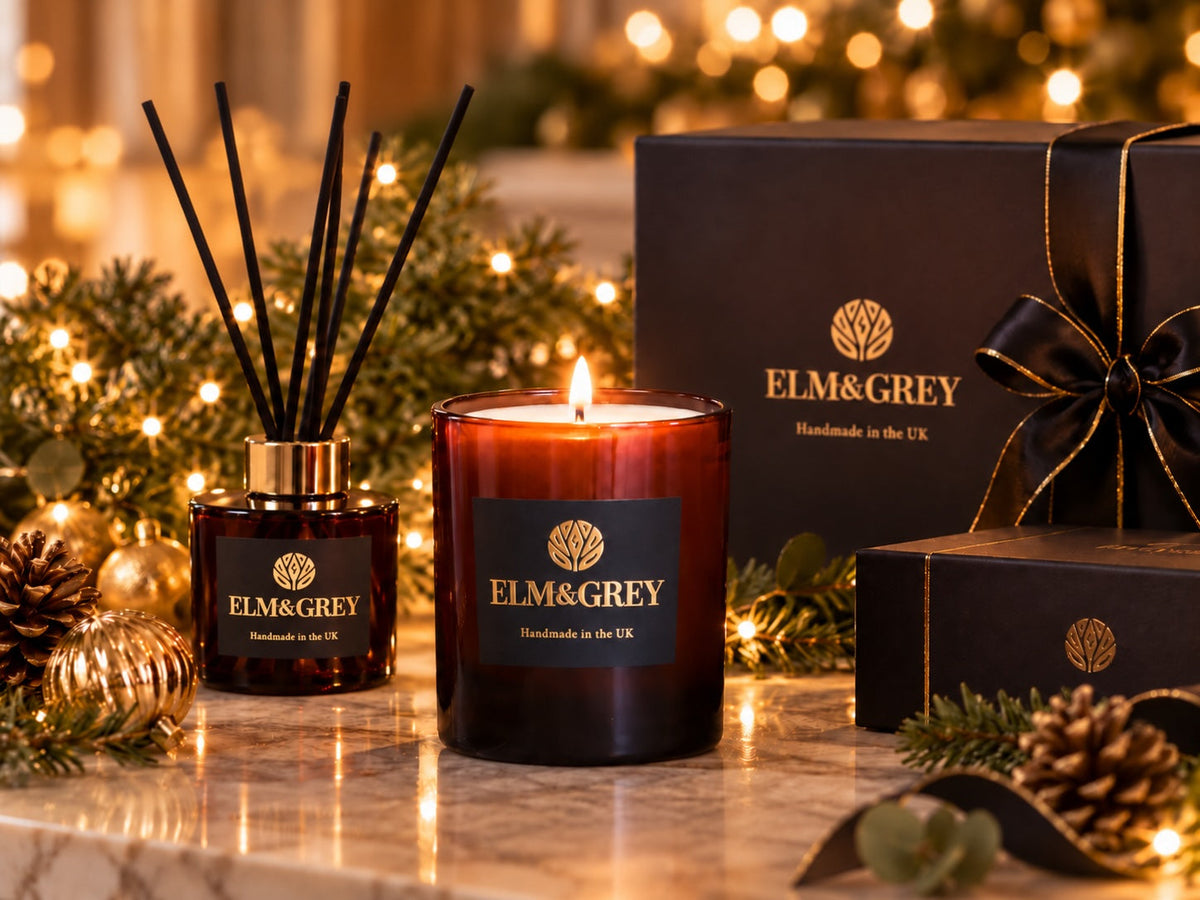
A candle is an event. You light it deliberately, it changes the room within minutes, and the ritual of lighting it is part of the pleasure. Choose candles for the rooms where you actively wind down.
A diffuser is a background. It scents a room continuously at a gentle level and asks nothing of you. Choose diffusers for hallways, bathrooms and the rooms you pass through rather than settle in.
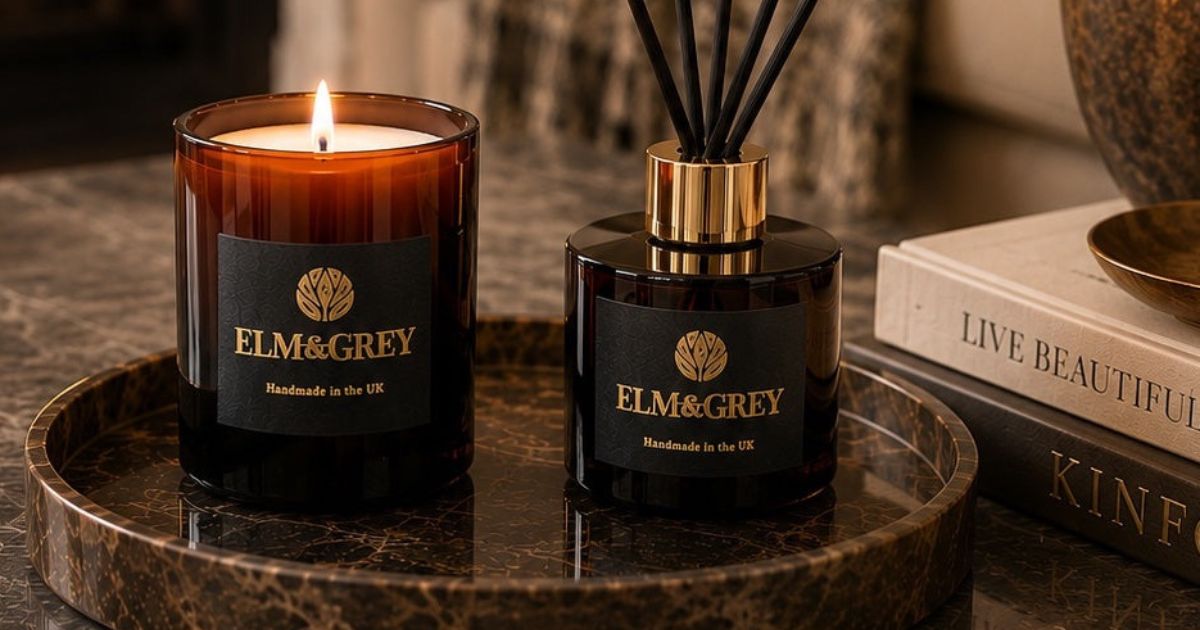
Many of our customers run both: a diffuser giving the house its everyday signature, and a candle reserved for evenings. If you only buy one, buy for the room you care about most.
A perfumer's tip
One thing worth knowing before you choose, so it never worries you later. If you stop noticing your fragrance after a couple of weeks, nothing has gone wrong. Your brain gradually learns a familiar scent and tunes it into the background, an effect perfumers call olfactory adaptation, and it happens to all of us. The fragrance is still there. Everyone who visits will smell it clearly, because it only fades for you, and you'll catch it yourself most on coming home after time away, when the contrast is sharpest. Whenever you'd like to notice it, a few minutes of fresh air and back inside gives you a moment of meeting your home the way a guest does, before it settles into the familiar again.
Where to begin
If you are choosing your first Elm & Grey fragrance, start with the ritual that matches what your home is missing - rest, energy or freshness, and choose the format for the room you will use it in.


Frequently asked questions
What is the best home fragrance for a bedroom? Warm, soft scents from our Unwind ritual suit bedrooms best, woods, amber and tonka read as comfort at gentle levels. Myrrh & Tonka is the fragrance our customers choose most often for the end of the day.
Which home fragrance is best for a kitchen? Brighter citrus and herbaceous scents work best in kitchens because they cut through cooking smells rather than competing with them. Look to our Uplift and Reset rituals.
Should I choose a candle or a reed diffuser? A candle is for the rooms where you deliberately wind down; a diffuser scents a room continuously with no effort. Hallways and bathrooms suit diffusers, while living rooms and bedrooms suit candles — many customers use both.
Why can't I smell my home fragrance any more? This is completely normal and doesn't mean the fragrance has faded. When you live with a scent every day, your brain learns it as familiar and tunes it into the background, an effect perfumers call olfactory adaptation. The fragrance is still there, and it only fades for you, never for a fresh nose, so everyone who visits will still smell it clearly. You'll catch it yourself most when you come home after time away. To notice it any time, step outside for a few minutes and walk back in, and you'll meet your home the way a guest does.