

How to Style a Decorative Tray: Simple Rules for a Calm, Considered Home
How to Style a Decorative Tray: The Elm & Grey Guide
A well-styled tray can make a room feel instantly more considered.
It brings separate objects together into one intentional arrangement, adds structure to a surface and helps everyday pieces feel part of the room rather than simply placed on it.
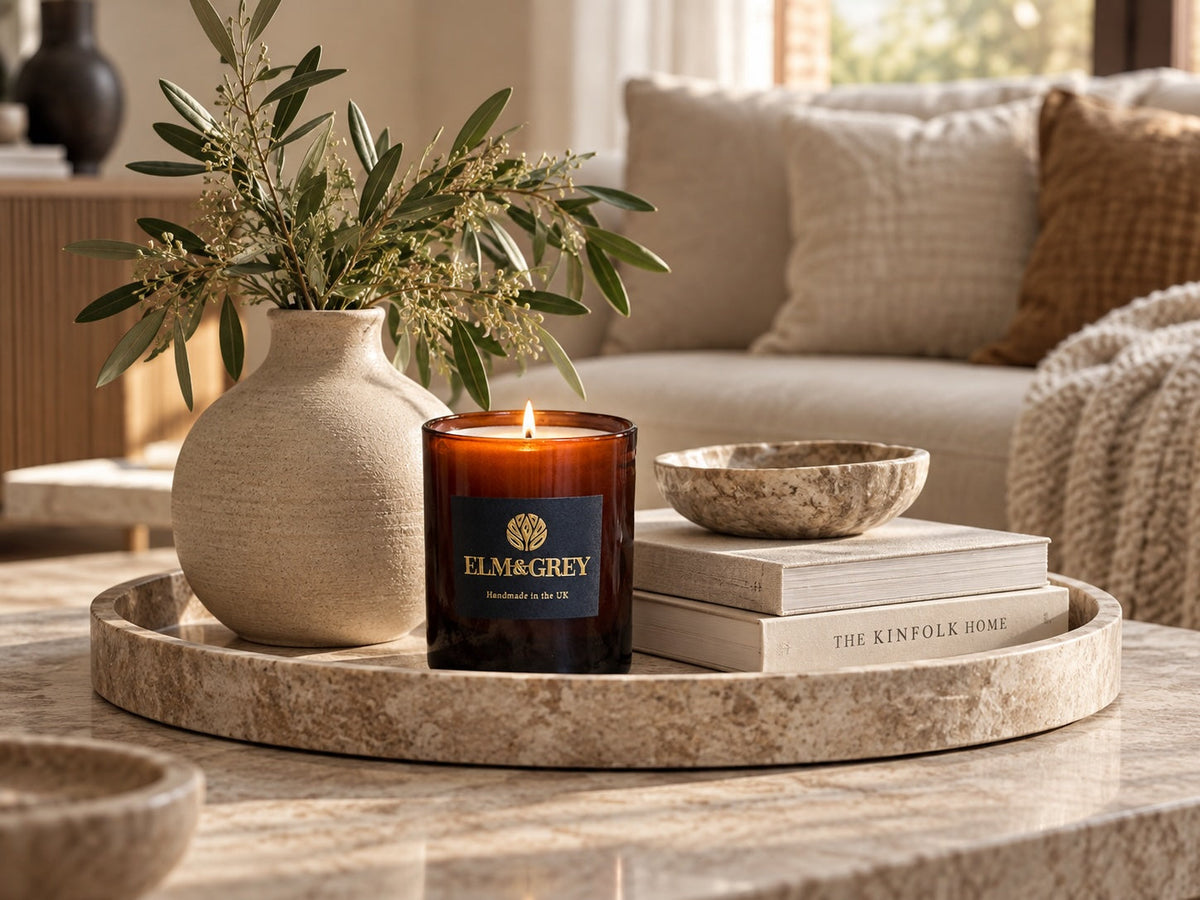
A candle on its own can sometimes look a little lost. Put it on a tray with a favourite book, a small bowl or a stem of greenery and suddenly the whole arrangement feels finished.
The secret is not adding more. It is choosing fewer things, varying their shape and height, and leaving enough space around them to breathe.
Start with the surface
Before choosing what goes on the tray, think about where the tray itself will sit.
As a rough guide, a coffee-table tray can comfortably take up around a third to half of the surface, while a tray on a console usually looks better slightly smaller so the furniture still has room around it.
Shape matters too.
Matching the tray to the table creates a calm, balanced look — a rectangular tray on a long console, for example. Choosing a contrasting shape, such as a round tray on a square coffee table, creates a little more visual interest.
Neither approach is better. The key is simply that it feels deliberate.
Material can help tie the arrangement into the rest of the room. Wood brings warmth, lacquer feels more polished, metal introduces a subtle contrast, while stone and textured finishes work beautifully in soft, neutral interiors.
Use three key elements
One of the simplest styling rules is also one of the most reliable: start with three pieces.
They should each play a slightly different role:
Something with height
A vase, foliage, a candlestick or a diffuser.
Something with weight
A stack of books, a bowl or a sculptural object.
Something useful or atmospheric
A candle, a small dish, hand wash or another piece you actually use.
This creates balance without making the tray feel busy.
If you are tempted to add a fourth or fifth item, ask whether it is adding anything to the composition. Often, removing one object makes the arrangement feel more luxurious.

Vary the heights
Three objects lined up at almost the same height can quickly start to feel flat.
Instead, aim for a clear tallest element, a lower anchor and something in between.
Books are particularly useful because they create instant height and give smaller objects more presence. A candle or bowl placed on two stacked books will often look much more intentional than the same object placed directly on the tray.
And remember to view the arrangement from where you actually see it.
A coffee table is usually seen from sofa height, not from directly above, so keep taller pieces low enough that they do not interrupt the room.
Leave some space
A styled tray should still show some of the tray itself.
Too many objects make it feel like storage. A little empty space makes the arrangement feel edited.
As a guide, leaving roughly a third of the tray clear usually creates the right balance.
This is particularly important if you are working with a beautiful lacquered, stone or textured tray — the finish should be visible rather than completely hidden.

Where fragrance fits
Fragrance is one of the easiest ways to make a styled tray feel both beautiful and useful.
A candle works particularly well because it brings warmth, atmosphere and a sense of ritual to the arrangement.
A reed diffuser is ideal on a console or hallway table, where air movement helps carry the fragrance through the space.
If you are styling both together, place the candle slightly forward and the diffuser towards the back so the reeds have space and the two pieces sit at different heights.
How to style a tray room by room
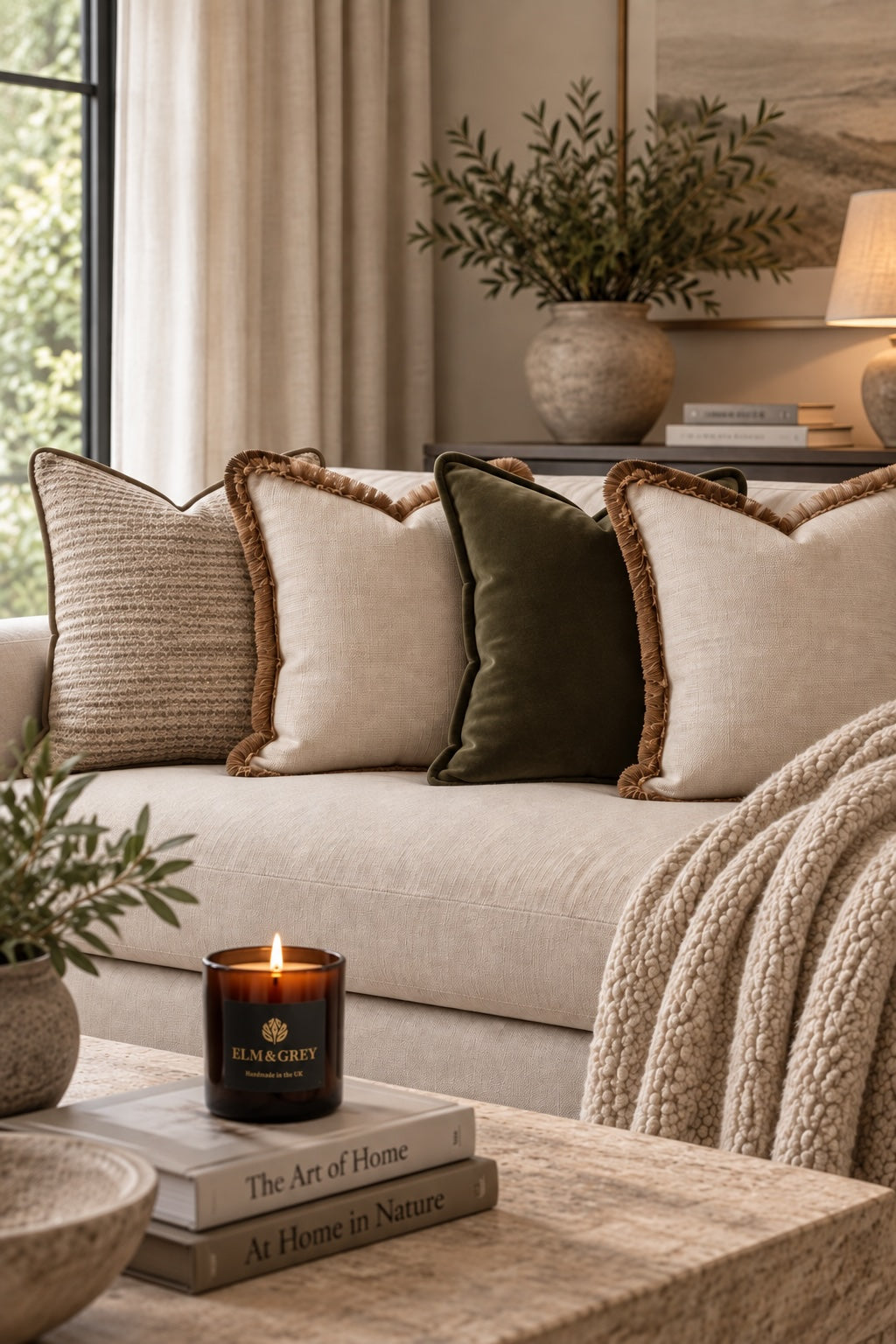
Coffee table
Keep the arrangement relaxed and low.
Try:
- two stacked books
- a candle
- a small bowl or piece of greenery
A round tray can soften a square or rectangular coffee table, while a rectangular tray creates a more structured look.

Console or hallway
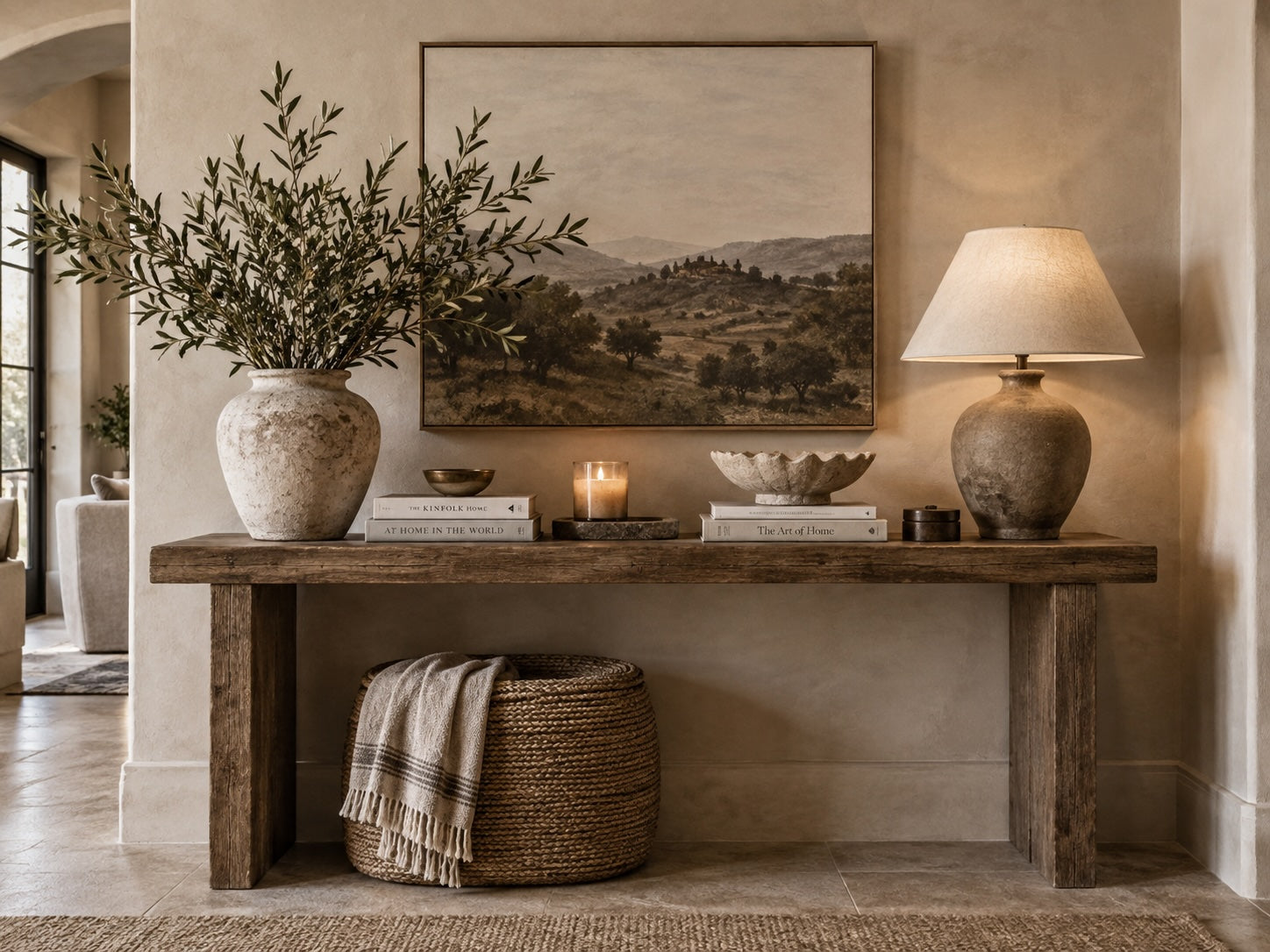
This is one of the best places to use a tray because it creates an immediate sense of order when you enter the room.
Try:
- a reed diffuser
- a small dish for keys
- a vase or taller decorative object
A rectangular tray usually works best because it follows the line of the console.
This is also an ideal place for fragrance, as people moving through the space naturally help disperse the scent.
Kitchen island
Keep it simple and easy to move.
A small tray can gather:
- oil
- salt
- a small plant
- a candle for the evening
The most important thing here is that the entire arrangement can be lifted away quickly when you need the worktop.
Kitchen counter
Here the tray is less about decoration and more about creating order.
Use it to gather the items that live out permanently — perhaps hand wash, oil, salt or a small utensil pot — and keep the rest of the work surface clear.
Dining table
A tray makes a dining-table arrangement much more practical because the entire display can be moved in one go when you need to lay the table.
Keep anything left in place during a meal fairly low — ideally below around 25cm — so people can still see one another comfortably.
Bedside table
Keep it small and functional.
A diffuser, book and water glass can be enough or a small floral arrangement.
Avoid anything tall or unstable that could easily be knocked in the dark.

Chest of drawers or dressing table
A tray is an easy way to stop smaller belongings spreading across the whole surface.
Use it for:
- jewellery
- a watch
- fragrance
- a small dish
- a candle
Positioning it slightly off-centre usually feels more relaxed than placing it exactly in the middle.
Bathroom
A tray can turn everyday necessities into something that feels intentional.
Try grouping:
- hand wash
- hand lotion
- a folded cloth
- a small ceramic dish
It is a simple way to make a practical area feel more considered.
Styling a tray on an ottoman
An upholstered ottoman is slightly different because the tray is doing a practical job as well as a decorative one.
Choose a rigid tray with a flat underside so the weight is evenly distributed, and make sure it sits fully within the upholstered edge rather than balancing across piping or seams.
A raised rim is useful for containing spills, while handles make it easier to lift the tray away when you want to use the ottoman as a footstool.
If the surface is particularly soft, test the tray first to make sure it does not rock.
The easiest styling formula
If you are ever unsure where to start, use this:
one tall piece + one low piece + one useful piece
For example:
- foliage in a small vase
- two stacked books
- a candle
It works on almost any table.
Then stand back and look again.
If it feels crowded, remove something.
That is usually the answer.
A final trick
Take a quick photograph on your phone.
A photograph flattens the arrangement slightly and makes it easier to spot whether one side feels too heavy, whether everything is the same height, or whether there is simply too much going on.
The goal is not perfection.
It is simply to make the objects you already love feel as though they belong together.
FAQs
What size tray should I use on a coffee table?
A tray that takes up roughly a third to half of the table usually works well, leaving enough surrounding space for the surface itself to remain visible.
How many objects should go on a decorative tray?
Three is a good starting point: one piece with height, one with visual weight and one useful or atmospheric object such as a candle.
Can you put a candle on a tray?
Yes. A tray gives a candle a defined place within an arrangement and can also help protect the surface underneath. Always follow normal candle-safety guidance and never leave a lit candle unattended.
Where should a reed diffuser go?
A console or hallway table is often ideal because the movement of people passing helps carry the fragrance through the room. Keep the diffuser towards the back of the tray so the reeds have plenty of space.
How do I stop a tray looking cluttered?
Reduce the number of objects, vary their heights and leave some of the tray base visible. If in doubt, remove one thing.
Are tiered trays still in style?
For calmer, more pared-back interiors, a single flat tray tends to feel more contemporary and less busy than a tiered arrangement.
How do you style a tray on an ottoman?
Choose a rigid tray with a flat base, keep it fully inside the upholstered edge and avoid narrow feet that may press into the fabric. Move heavier trays occasionally to avoid compressing the upholstery.